Professional Animal Transport by Car: An Operational Checklist for Safe Trips
Transporter guidesA practical checklist for transporters and animal care professionals: vehicle checks, information gathering, delivery handling, documents, owner communication, and anomaly logging.
In this guide
Transporting a dog, cat, or another animal on behalf of an owner requires more than simply driving. A professional service should combine road safety, organization, communication, and traceability at every step.
This checklist is intended for transporters, pet sitters, animal service operators, and professionals who accompany animals by car. It does not replace a veterinarian’s instructions or the need to verify which obligations apply to a specific service, especially when transport is international, commercial, or connected to a transfer of ownership.
1. Before accepting the service
Before confirming a request, gather all the information needed to understand whether the trip is compatible with your vehicle, route, and operating methods.
Information about the animal
- species, name, age, and approximate weight;
- breed or handling-relevant characteristics;
- number of animals to be transported;
- usual behavior during travel;
- any fears, known reactions, or handling difficulties reported by the owner;
- need for a carrier, divider, harness seat belt, or other equipment;
- feeding routine and usual schedule;
- any routine medications or written instructions from the owner;
- contact details for the owner and for a person reachable during the trip;
- contact details for the regular veterinarian, if the owner considers it appropriate.
Avoid making your own health assessments. If the owner reports special conditions, ask for written instructions and, when necessary, encourage them to consult their veterinarian in advance.
Information about the service
Clarify in advance:
- pickup location and time window;
- destination address and the name of the person authorized to receive the animal;
- estimated duration and any stops;
- any intermediate stages;
- how keys, the carrier, and documents will be handed over;
- authorization to contact the owner in case of delay or unforeseen events;
- procedures to follow if the recipient is not present.
A written confirmation helps reduce misunderstandings and makes it easier to reconstruct operational responsibilities.
2. Checking the vehicle before departure
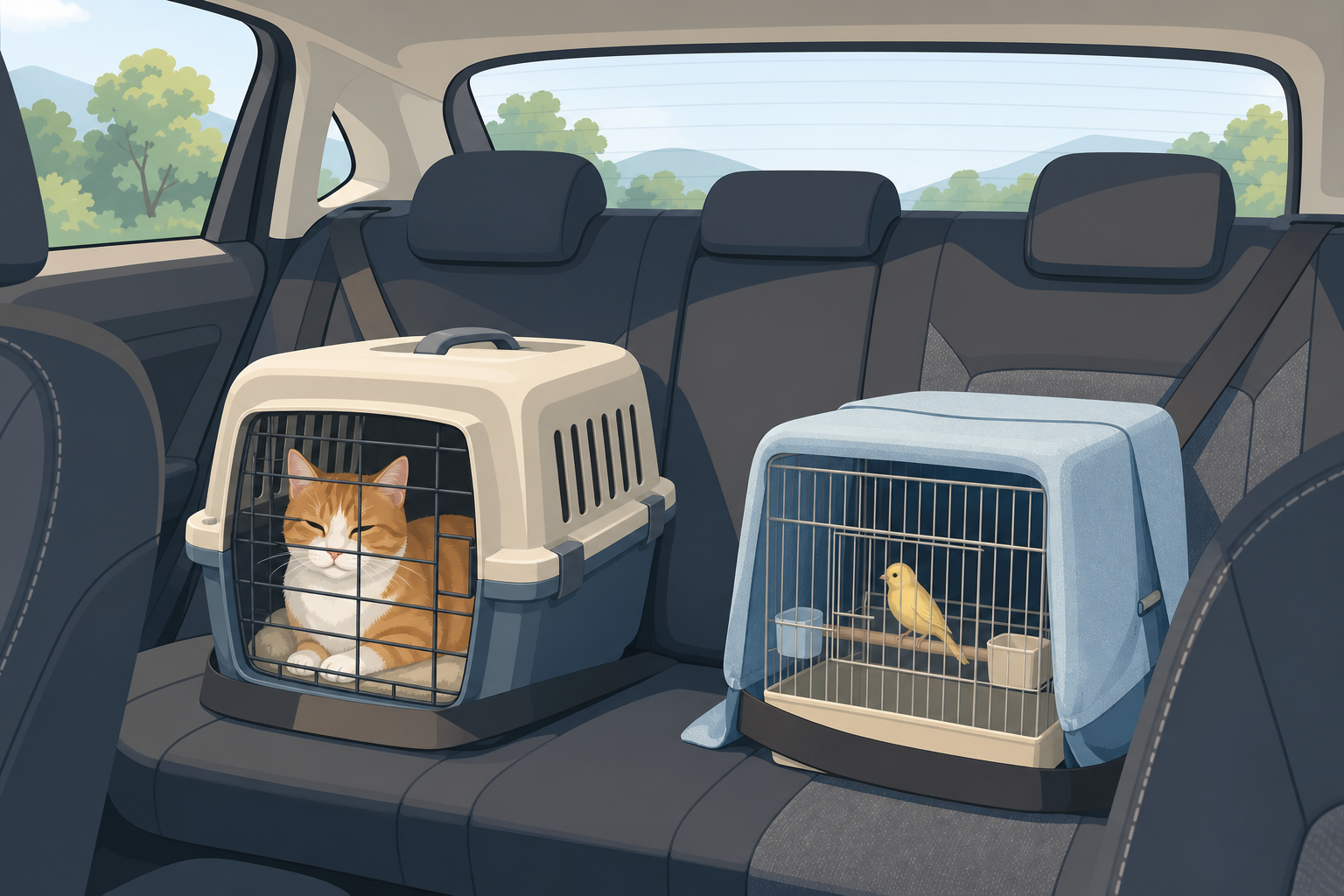
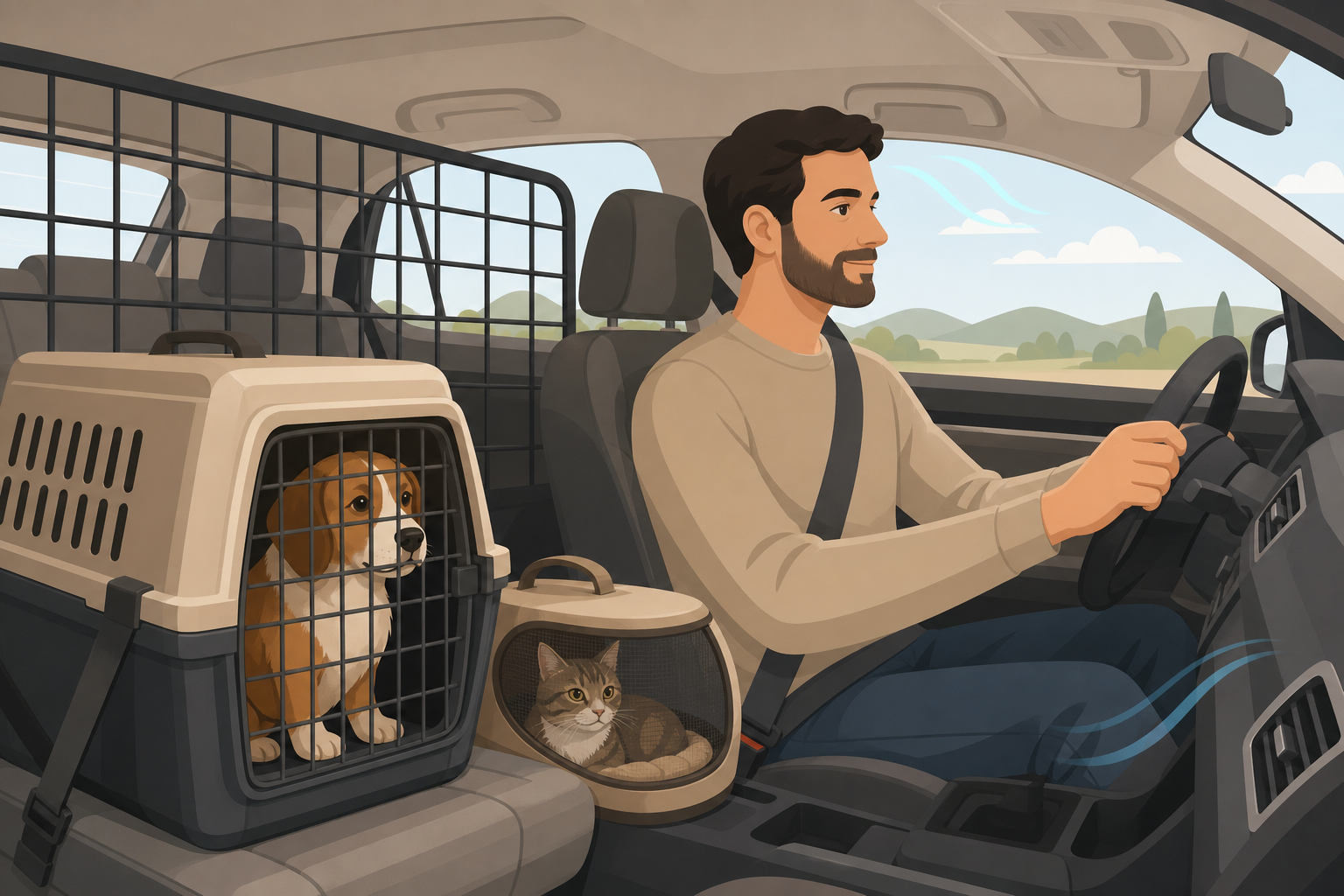
The vehicle should be clean, orderly, and set up to prevent escape, falls, impacts, or interference with driving. In Italy, Article 169 of the Highway Code prohibits transporting pets in conditions that create an impediment or danger to driving. When there is more than one animal, they must be secured in a suitable cage or container, or in the rear compartment separated from the driver’s seat by a net or another suitable barrier, as provided by the law. S1
Quick cabin check
- carrier or container intact, clean, and suitable for the species and size;
- closures working properly and not able to open accidentally;
- secure fastening systems;
- divider or net correctly installed, when needed;
- non-slip flooring and washable protective surfaces;
- no loose items that could fall or injure the animal;
- sufficient ventilation without direct exposure to drafts;
- temperature that can be controlled during the trip;
- easy access to the container for checks during stops;
- cleaning kit, waste bags, towels, and absorbent material;
- water and a bowl, if required by the owner or by the duration of the trip;
- leash or harness to be used only during loading, unloading, and stops.
Do not leave the animal loose in the passenger compartment, and do not place the carrier where it could obstruct visibility or the driver’s controls. Before leaving, also check fuel or range, phone battery, navigation system, and route conditions.
3. Documents and authorizations
Prepare a physical or digital file for each service. It may include:
- details of the owner and the person authorized to receive the animal;
- the animal’s identifying details;
- authorization for transport and handover;
- updated phone numbers;
- health record booklet or other documentation provided by the owner;
- pet passport, where applicable;
- written instructions on feeding, stops, and routine management;
- invoice, assignment, or service confirmation;
- initial photos of the carrier and the animal, if agreed and handled in compliance with privacy rules.
For travel between European Union countries, dogs, cats, and ferrets may be subject to specific requirements relating to identification, rabies vaccination, and documentation, including the EU pet passport for movements covered by EU rules. Conditions vary depending on the route and the country of departure or destination. S4
European rules on non-commercial movements are designed for private travel that does not involve sale or transfer of ownership. If the service is performed professionally, the animal travels without the owner, or the transfer falls under a commercial scenario, the applicable legal framework and required documents should be checked in advance. [S3]S4
For animals other than dogs, cats, and ferrets, conditions may depend on national rules and the species involved. Do not assume that the EU pet passport applies to every companion animal.
4. Picking up the animal
The initial handover is as important as the final delivery. Take a few minutes for a shared check with the owner.
At pickup
- Confirm the identity of the animal and the person entrusting it to you.
- Check that the carrier or containment system is closed and intact.
- Ask when the animal last ate, drank, and relieved itself.
- Collect the essential instructions for stops, feeding, and routine handling.
- Review any pre-existing anomalies with the owner and note them down.
- Agree on the communication channel for updates and urgent issues.
- Define who can authorize changes to the service or destination.
For car travel, the Italian Ministry of Health recommends regular stops, fresh water, adequate space, sufficient ventilation, and protection from extreme temperatures. S2
Do not administer medications, sedatives, or other products on your own initiative. Any instructions should come from the owner and, when they concern the animal’s health, should already have been agreed with the veterinarian.
5. During the trip
Drive smoothly, avoiding unnecessary braking, acceleration, and sharp direction changes. Check on the animal only when the vehicle is safely stopped.
Managing stops
Plan stops in safe and suitable places. Before opening a door or the tailgate:
- make sure the leash or harness is properly attached, when needed;
- check the surrounding environment;
- avoid areas with heavy traffic or direct access to the roadway;
- never leave the animal unattended during a stop;
- note the time and duration of the break on longer journeys.
During the trip, periodically verify, without disturbing the animal, that the container remains stable and that ventilation is not obstructed. In case of heat, severe cold, prolonged traffic, or detours, reassess the travel plan and inform the owner if the estimated timing changes.
Do not leave the animal alone in a parked vehicle. Even a short stop can create unsuitable environmental conditions, especially in very hot or very cold weather.
6. Communication with the owner
A professional service does not require constant messaging, but it does require clear updates at the agreed times.
It is useful to communicate:
- departure from the pickup point;
- any significant delays;
- arrival at a scheduled stop, if planned;
- route changes;
- arrival near the destination;
- completed delivery.
Use descriptive, non-alarmist language. Instead of making diagnoses or interpretations, record observable facts: “the animal vomited during the stop,” “the carrier shifted,” “the owner is not responding,” “the delivery was postponed.”
If you notice a behavior or condition that concerns you, contact the owner and follow the agreed instructions. In the presence of an apparent emergency, the priority is to secure the vehicle and seek qualified support, according to company procedures and the instructions of the relevant services.
7. Delivering the animal
The handover should take place only with the person indicated in the assignment or authorized by the owner.
Recommended procedure
- verify the name and identity of the recipient;
- hand over the animal in a safe place, away from traffic;
- transfer documents, food, routine medications, and personal items;
- communicate any stops, meals, eliminations, or recorded anomalies;
- obtain confirmation of delivery through a signature, message, or another agreed method;
- note the date, time, and place of handover.
Do not hand the animal over to a neighbor, acquaintance, or passerby without prior verification and clear authorization.
8. Anomaly log
A simple log helps improve the service and properly manage any disputes. For each event, record:
- date and time;
- route and approximate location;
- objective description of what happened;
- condition of the vehicle and the container;
- action taken;
- person contacted and time of communication;
- any related photos or documents;
- final outcome of the situation.
Examples of anomalies to record include: significant delay, escape or attempted escape, damage to the carrier, vomiting, diarrhea, an apparent wound, refusal to enter the container, vehicle breakdown, unsuitable temperature, or absence of the recipient. The record should not contain diagnoses: it should be limited to observable facts and actions taken.
9. Ready-to-use summary checklist
Before the service
- Animal details collected
- Owner contact details verified
- Authorized recipient identified
- Route and stops planned
- Documents checked
- Vehicle clean and organized
- Carrier or containment system available
- Fastening equipment checked
- Water and cleaning supplies ready
- Procedure for delays and unforeseen events agreed
At pickup
- Animal identity confirmed
- Initial condition and anomalies noted
- Owner instructions received
- Documents and items handed over checked
- Carrier closed and secured
During the trip
- Careful driving
- Stops carried out safely
- Ventilation and temperature checked
- Updates sent as agreed
- Any anomalies recorded
At delivery
- Recipient verified
- Animal handed over safely
- Documents and items returned
- Anomalies communicated
- Receipt confirmed
Organizing services more effectively with BauBauCar
When requests increase, managing information, schedules, contacts, and handovers through separate messages can become impractical. A structured platform like BauBauCar can help organize the workflow more effectively: receiving more complete requests, centralizing service details, facilitating communication between owner and transporter, and maintaining a clearer record of agreements.
For a professional, the value is not only finding an assignment, but being able to assess it with sufficient information, set realistic expectations, and properly document pickup, travel, and delivery. Organized management helps make the service more transparent for everyone involved and more consistent with the animal’s needs.
Before every trip, use the checklist, verify which obligations apply to the route, and communicate clearly. Safety comes from the combination of a suitable vehicle, simple procedures, and well-defined responsibilities.
Sources
- [S1] Art. 169 - Trasporto di persone, animali e oggetti sui veicoli a motore — ACI Gov
- [S2] Consigli utili per viaggiare con i nostri animali — Ministero della Salute
- [S3] Trasporto degli animali d’affezione — Ministero della Salute
- [S4] EU rules on travelling with pets and other animals in the EU — Your Europe - Unione europea