Pet Transport Checklist: Information and Checks Before Departure
Transporter guidesA practical checklist for owners and transporters covering the information to collect, documents to verify, and how to plan handover, travel, emergencies, and the animal’s arrival.

In this guide
Why use a shared checklist
A form completed before departure helps reduce misunderstandings, omissions, and delays. The owner and transporter should have access to the same up-to-date sheet, which must be easy to consult during the journey. A checklist does not replace the rules of the destination country or advice from a veterinarian: its purpose is to standardize the collection of operational information.
For non-commercial travel involving dogs, cats, and ferrets between European Union countries, authorities generally require identification by microchip, a valid rabies vaccination, and an individual pet passport. Additional conditions may apply depending on the destination or country of origin S1 (food.ec.europa.eu). Before confirming international transport, check the requirements for the specific destination and verify all required documents.
Information to collect from the owner
1. Animal identification
- Animal’s name
- Species: dog, cat, rabbit, bird, or other
- Breed or type, where relevant
- Sex, age, or date of birth
- Approximate weight and dimensions
- Microchip number or other identifier
- Recent photograph
- Distinguishing marks
- Whether the animal will travel with other animals: yes/no
- Known reactions to noise, handling, people, or other animals
The microchip number must match the number shown in the documents. As an operational check, the transporter may verify the animal’s identity at collection by comparing the microchip, description, and photograph. This does not replace checks by the authorities or a veterinarian.
2. Contacts and responsibilities
- Full name of the owner or custodian
- Main telephone number
- Alternative contact reachable during the journey
- Departure address
- Person authorized to hand over the animal
- Person authorized to collect the animal
- Recipient’s telephone number
- Veterinarian contact provided by the owner
- Agreed emergency contact
- Instructions identifying who may authorize changes to the journey
It is useful to define in writing who makes decisions in the event of a delay, diversion, failed delivery, or need to contact a veterinarian.
3. Needs and operating instructions
- Usual food and quantity to be provided
- Usual meal times
- Any written instructions already provided by the veterinarian
- Usual frequency of breaks and outings
- Method of providing water
- Items that help the animal maintain a familiar routine
- Handling practices to avoid
- Need to keep the animal separated from others
- Any travel restrictions already communicated by the veterinarian
- Agreed emergency procedures
Instructions should be specific: “keep the carrier closed while moving” is more useful than “take care.” Any medication or treatment must be accompanied by veterinary instructions and must not be improvised by the transporter.
Documents to verify
Domestic transport
For a transfer within Italy, collect at least:
- Animal identification document, if available
- Microchip number and related registration
- Health documentation provided by the owner
- Any certificates or authorizations required by the departure or arrival facility
- Transport authorization or delegation, where necessary
- Complete sender and recipient contact details
International transport
- Countries of departure, transit, and destination
- EU pet passport, where required
- Readable microchip matching the documents
- Valid rabies vaccination, if required
- Any required health certificate
- Any declaration of non-commercial movement
- Additional treatments or tests required by the destination
- Rules set by the airline, railway, shipping company, or carrier
- Reservation or authorization for transporting the animal
The Italian Ministry of Health states that an Italian pet passport for dogs, cats, and ferrets is issued by the veterinary services of the local health authority (ASL); the microchip number must be entered in the document S2 (salute.gov.it). Travel from non-EU countries may require additional certificates, checks, or tests. These requirements should be verified before purchasing the service, not on the day of departure S1 S2 (europa.eu).
Carrier and vehicle checks
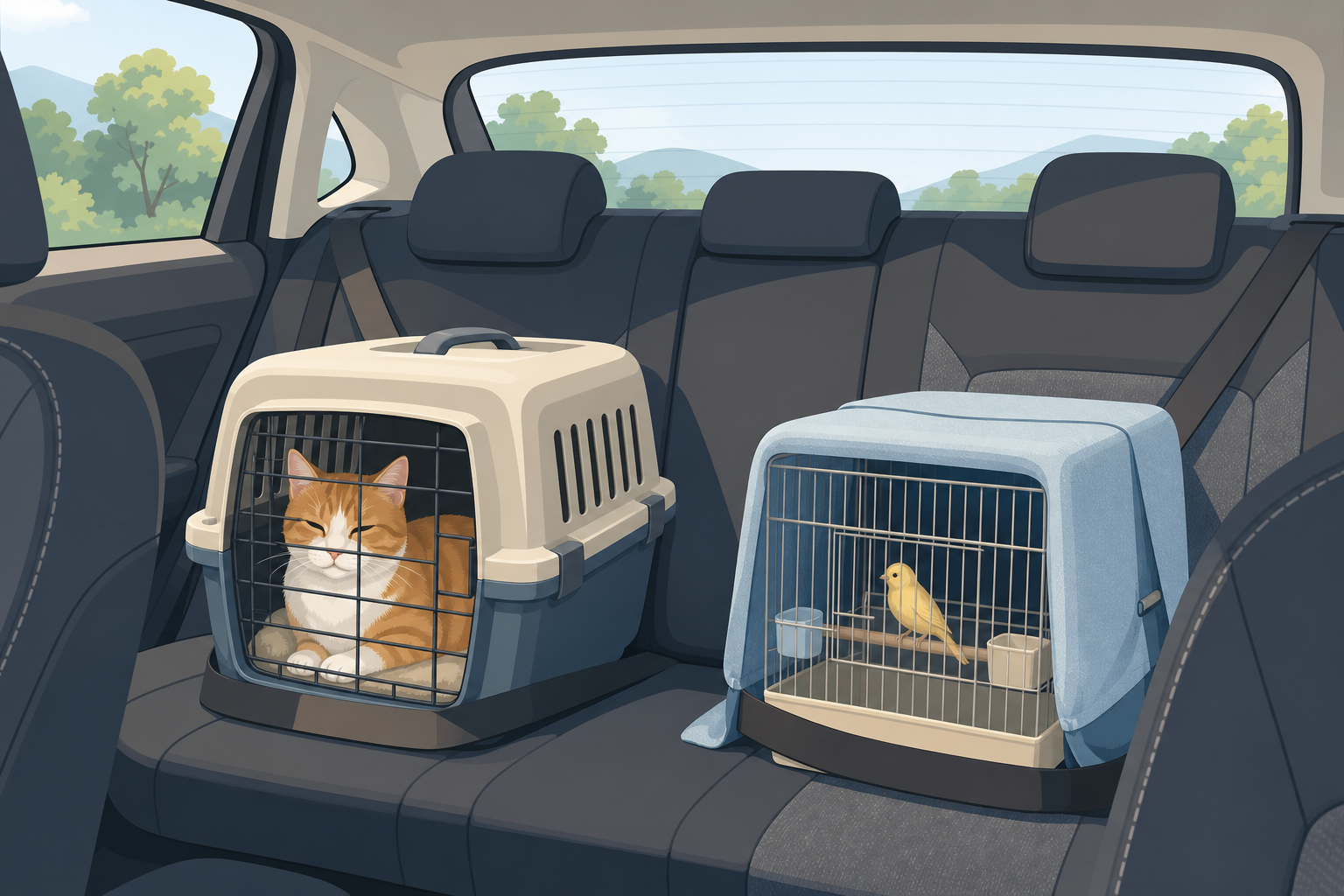
- Carrier or container is intact, stable, and suitable for the species and size
- Closures work correctly and prevent accidental escape
- Adequate ventilation
- Non-slip base and absorbent material
- Access to water, where necessary for the journey’s duration
- Label showing the animal’s name and contact details
- Partial cover available if it helps reduce stimulation without obstructing airflow
- Safe separation between incompatible animals
- Vehicle is clean and prepared for spills or unexpected events
- Temperature and environmental conditions checked
- Safe loading and unloading area
- Cleaning kit, gloves, bags, towels, and replacements
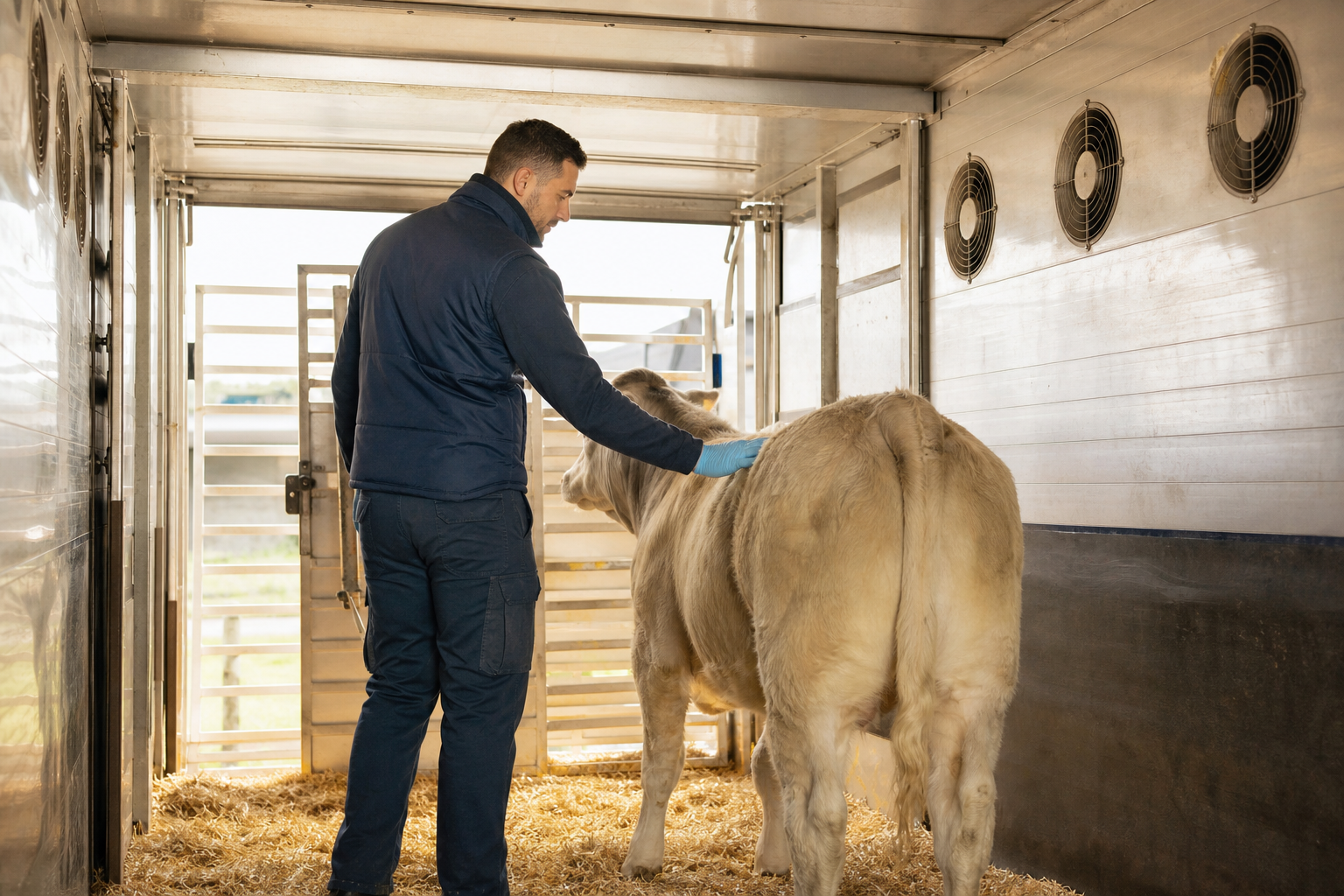
For transport connected with an economic activity and within the scope of Regulation (EC) No 1/2005, the vehicle must protect animals from injury, escape, adverse weather conditions, and ventilation problems. The journey, checks, and care must also be planned S3 (eur-lex.europa.eu). The transporter must determine which authorizations and obligations apply to the service. Among other cases, the regulation excludes transport that is not connected with an economic activity and transport directly to or from veterinary clinics on a veterinarian’s instructions S3 (eur-lex.europa.eu).
Timing and handover
- Planned collection date and time
- Exact address and access instructions
- Planned delivery date and time
- Estimated duration and scheduled stops
- Allowance for traffic, checks, or delays
- Method for providing updates during the journey
- Exact delivery point
- Document or code identifying the recipient
- Signature or digital confirmation at collection
- Signature or digital confirmation at delivery
- Photograph of the carrier and animal at collection, where covered by the privacy notice
At collection, the transporter should record at least the time, animal’s identity, apparent condition, documents received, items provided, and name of the person present. At delivery, they should record the time, recipient’s identity, and any observed irregularities.
Final pre-departure check
Use this section as the “departure block”:
- Owner and recipient have confirmed addresses and telephone numbers
- Microchip or other identifier checked against the documents
- Documentation checked, with originals available where required
- Carrier closed, labelled, and secured correctly
- Agreed water, food, and items are present
- Weather conditions and journey length assessed
- Stops and any emergency plan defined
- Transporter informed about the animal’s needs and behaviour
- Authorized collector confirmed
- All data handled according to the applicable privacy notice
- Departure authorized by both parties
Online form template
To turn the checklist into a digital form, organize the fields into six sections: animal, contacts, needs, documents, journey, and delivery. Make fields required when they are needed to identify the animal or contact the responsible people. Leave details that are not relevant to the species or route as optional.
A good process also includes three statuses: to be checked, verified, and not applicable. This prevents a blank field from being mistaken for a completed check. For air transport, also consult the carrier’s rules and the standards applicable to the container. IATA provides specific procedures and requirements for transporting live animals by air and states that the 2026 edition of its Live Animals Regulations is in force from 1 January 2026 S4 (iata.org).
A simple rule for better practice
The checklist is effective when it is completed before the final booking, reviewed with the owner, and closed with written confirmation. If essential information is missing, the transport should not be considered ready. It is better to pause confirmation and clarify the information with the owner, carrier, or competent authority.
Operational sources
Sources
- [S1] Travelling with a pet within the EU — Commissione europea
- [S2] Passaporto degli animali da compagnia — Ministero della Salute
- [S3] Regolamento (CE) n. 1/2005 sulla protezione degli animali durante il trasporto — Unione europea
- [S4] Live Animal Handling & Transport — International Air Transport Association