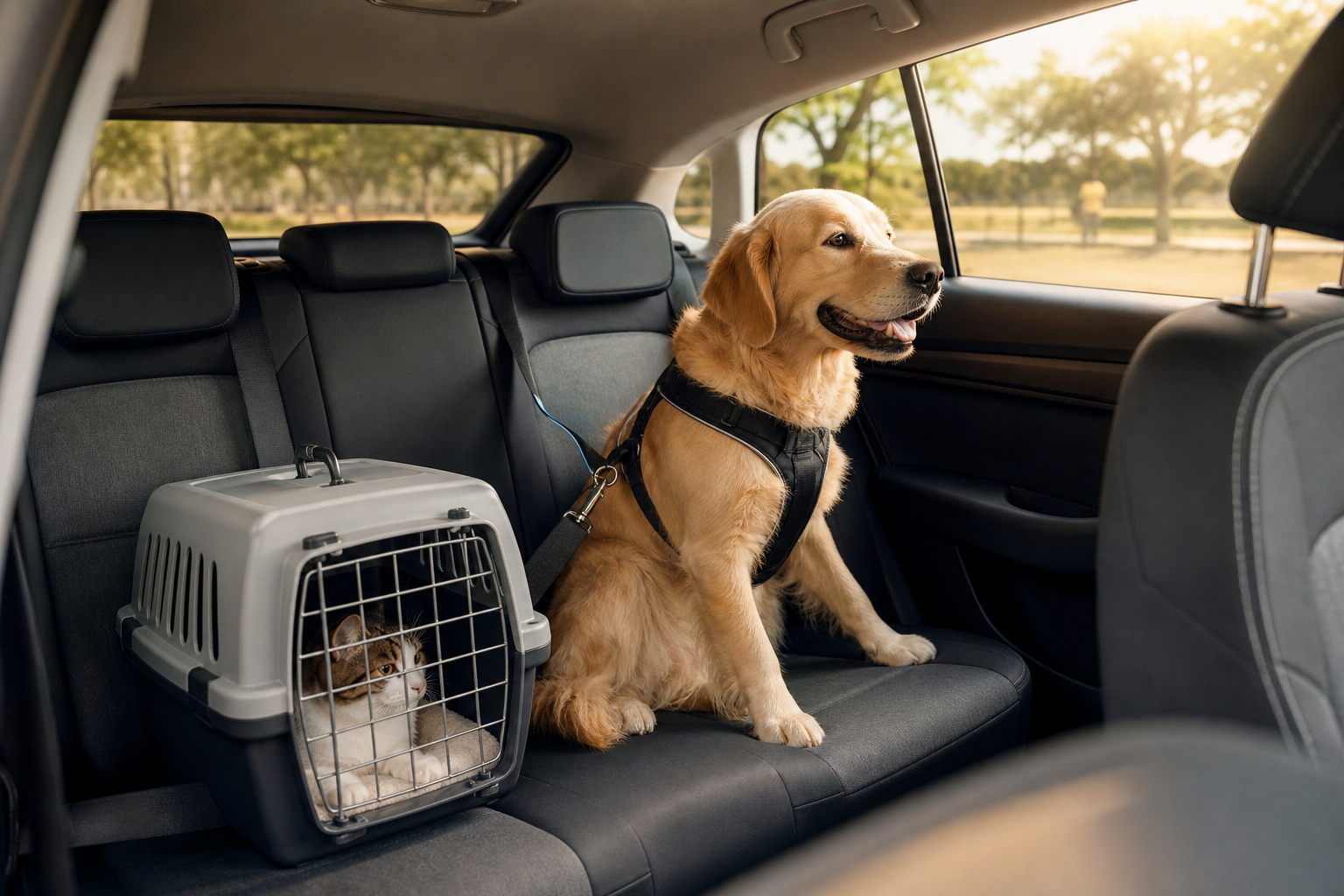
How to Choose a Live Animal Transport Service: Key Criteria
Transport guidesExperience, authorizations, vehicle conditions, communication, pricing and responsibilities: a practical guide to comparing live animal transport services without relying on price alone.
In this guide
Entrusting an animal to a transport service involves more than comparing prices. The quality of the planning, staff training, vehicle conditions and communication can all directly affect the safety of the journey.
Before booking, it is useful to verify who is organizing the transport, how it will be carried out, which documents are required and what happens in the event of a delay or unexpected problem. Applicable rules may vary depending on the species, route, journey duration, destination country and whether the movement is private, commercial or international.
1. Clarify the type of transport
The first step is to describe the service you need accurately. Transporting a dog or cat between two cities in the same country is not the same as moving several animals on behalf of a breeder or arranging an international transfer.
Before requesting a quote, prepare this information:
- species, number of animals, age and size;
- collection address and destination;
- preferred date or date range;
- any need for collection or delivery at home;
- whether a carrier, crate or other container is available;
- whether borders must be crossed or ferries, trains or aircraft used;
- any need to keep animals separated from others;
- documents already available.
For dogs, cats and ferrets travelling between European Union countries, identification by microchip, a passport and a rabies vaccination meeting the applicable conditions may be required. Rules for non-commercial travel do not automatically apply to transfers involving sale, change of ownership or adoption; different procedures may apply in those cases. S1 S2 (salute.gov.it)
2. Check experience and competence
A reliable operator should be able to explain clearly how it handles the species being transported and which procedures it follows during the journey. Experience should not be judged only by the number of years in business, but also by its relevance to the specific situation.
For example, ask:
- How many similar journeys are usually carried out?
- Does the staff have experience with dogs, cats, small mammals, birds or other species?
- Who handles loading, unloading and delivery?
- Does the driver work alone or with an attendant?
- How are frightened, very young, elderly or differently sized animals managed?
- Does the operator use subcontractors? If so, who will actually be responsible for the journey?
For transport covered by European animal-welfare rules, the transporter must be authorized and able to identify a person responsible for the operation. Planning must also take the animals’ welfare into account and coordinate the different stages of the journey. S3 (eur-lex.europa.eu)
An operator does not need to promise a “stress-free” journey: absolute assurances are unrealistic. It is more useful for the operator to explain specifically how risks are reduced and what action will be taken if circumstances change.
3. Check authorizations and documents
Do not hesitate to ask which authorizations are required for the transport and whether the operator holds them. Make the request specific by identifying the route, species and expected duration.
Useful questions include:
- What is the transporter’s authorization number, if applicable?
- Does the authorization cover the planned journey?
- Do the driver and staff hold the certifications required for their roles?
- Which documents must the owner provide?
- Who checks that the documents are correct before departure?
- Are additional formalities required for transit or the destination?
In Italy, the Ministry of Health distinguishes transporter authorizations partly according to journey duration. Long journeys are subject to additional conditions, including an emergency plan. Authorities inspect animals, vehicles and documents, and violations may result in penalties or action affecting the authorization. S2 S4 (salute.gov.it)
Depending on the circumstances, the required documentation may include the animal’s identification details, health documents, a passport, destination information and transport-related documents. It is sensible to request a written list and a deadline for submitting each item.
4. Assess the vehicle, containers and travel conditions
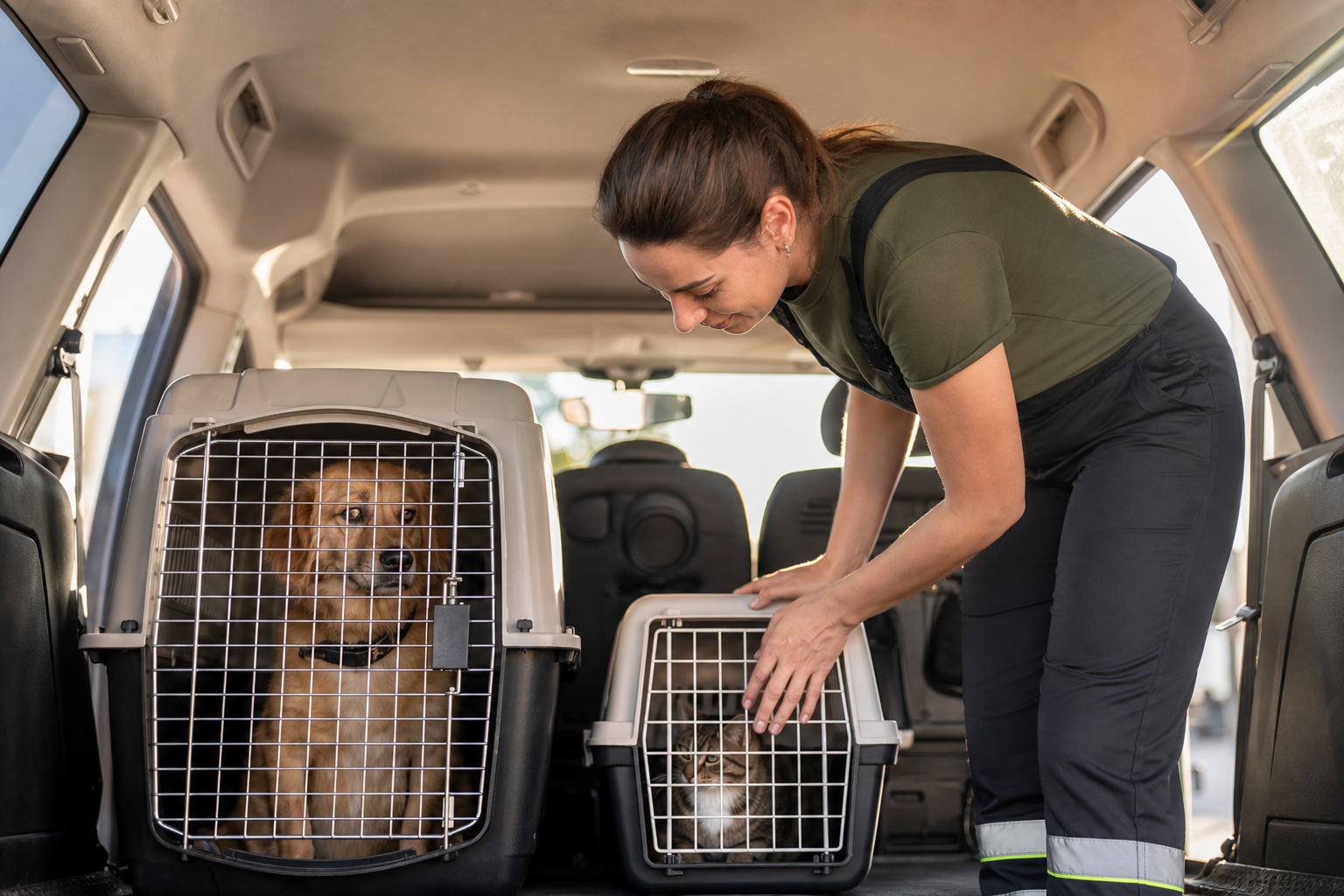
A professional service should be able to describe the vehicle being used without giving vague answers. The vehicle or container must be suitable for the species, the animals’ size and the length of the journey.
Check whether it provides:
- adequate ventilation and temperature control when necessary;
- sufficient space for each animal;
- stable, cleanable and non-slip surfaces;
- secure closures;
- separation between incompatible animals or animals that should not travel together;
- protection from heat, cold, rain and excessive drafts;
- practical access for checks during the journey;
- cleaning and disinfection procedures;
- equipment for handling minor problems and delays.
International transport recommendations emphasize planning for space, ventilation, water, feeding, rest, handling and emergency management. Responsibility for welfare is shared among owners, organizers, transporters and the operators involved in loading and unloading. S5 (woah.org)
If possible, ask for recent photographs of the transport area or arrange an inspection. The vehicle does not need to be new or cosmetically perfect: suitability, maintenance, cleanliness and safety matter most.
5. Understand how the journey is organized
Prices can vary considerably depending on the operating model. A dedicated transport service, for example, is organized differently from a shared journey carrying several animals and making several stops.
Ask in advance about:
- estimated door-to-door duration;
- expected number of stops;
- any vehicle or driver changes;
- whether other animals will be on board;
- how breaks will be managed;
- agreed arrangements for feeding and hydration;
- estimated collection and delivery times;
- stopping locations, where relevant to the route;
- what happens in the event of traffic, breakdown, bad weather or an unavailable recipient.
For international journeys, planning is even more important. Missing documents, customs rules, health certificates or unexpected events along the route can cause delays and difficulties. WOAH highlights the importance of clear responsibilities, coordination between the parties, trained staff and plans for handling unexpected events. S5 (woah.org)
Be cautious of offers that promise only “fast delivery” without explaining what that means, the estimated times or how stops will be managed.
6. Evaluate communication
Transparent communication is a safety factor, not merely a matter of courtesy. Before booking, check whether the operator answers questions precisely and puts the main information in writing.
It is reasonable to expect:
- written confirmation of the collection point and destination;
- a summary of the required documents;
- the name and contact details of the operational contact;
- updates during the main stages of the journey;
- prompt notice of delays or changes;
- confirmation that delivery has taken place;
- instructions about who may hand over and collect the animal.
Also ask which communication channel should be used during the journey and during which hours. An operator that does not explain whom to contact if a problem arises leaves an important part of the arrangements uncertain.
7. Read the quote carefully
The quote should clearly state what is included and what may create additional charges. The final price may depend on distance, duration, number of animals, dedicated or shared transport, tolls, ferries, overnight stays, documents, collection assistance and home delivery.
Check whether the quote specifies:
- total price and currency;
- VAT and other charges;
- supplements for waiting time, detours or stops;
- costs for a carrier or container;
- possible charges for paperwork or documents;
- cancellation and amendment conditions;
- payment deadlines and methods;
- insurance coverage and its limitations;
- responsibility in the event of delay, failed delivery or inability to depart.
A very low price is not necessarily an advantage if it excludes essential elements, such as home delivery, dedicated handling or the cost of a sea crossing. Conversely, a higher price does not by itself demonstrate better quality.
8. Define the responsibilities of each party
Before confirming the service, establish who is responsible for each task. The owner should provide complete and accurate information about the animal, prepare the required documents and identify the people authorized to hand over and collect it.
The operator should clarify:
- which checks are carried out before departure;
- how the animal’s identity is verified;
- who handles loading and unloading;
- how any irregularities are recorded;
- how an emergency is communicated;
- when the owner or nominated contact is notified;
- the limits of the service;
- what happens if the journey cannot continue.
Responsibility may be shared among the owner, organizer, transporter, driver, departure facility and receiving facility. Putting the arrangements in writing reduces the risk of misunderstandings, especially when several parties or subcontracting are involved.
9. How to compare several offers
To compare two or more services properly, use the same checklist for every operator. You can rate each element from 1 to 5:
| Criterion | What to compare |
|---|---|
| Experience | Species and types of journeys previously handled |
| Authorizations | Documents relevant to the route and duration |
| Vehicle | Ventilation, safety, cleanliness and space |
| Organization | Stops, changes, timings and contingency planning |
| Communication | Contact person, updates and delivery confirmation |
| Quote | Included items, supplements and conditions |
| Responsibilities | Contract, insurance and service limitations |
| Flexibility | Ability to handle reasonable changes and delays |
Give greater weight to criteria that directly affect safety and the predictability of the journey. Compare prices only after confirming that the offers cover equivalent services.
10. Warning signs before booking
Pay particular attention if the operator:
- avoids stating who will physically carry out the transport;
- cannot explain which documents are required;
- does not provide a written quote;
- promises absolute timings or results without explaining the conditions;
- does not describe the vehicle or operating procedures;
- suggests travelling without adequate documentation;
- requests payments that do not match the agreed terms;
- does not explain how delays, breakdowns or failed delivery are handled;
- changes contacts repeatedly without providing an operational lead.
One factor alone does not necessarily prove that a service is unreliable, but several warning signs together justify additional checks or comparison with other operators.
Questions to ask before booking
You can use this list when requesting a quote:
- Which operator will actually carry out the transport?
- Which authorizations and certifications are relevant to this route?
- What type of vehicle or container will be used?
- How many animals will travel together?
- Will there be changes, stops or subcontracting?
- What is the estimated door-to-door duration?
- How are heat, cold, delays and breakdowns managed?
- Who handles loading, unloading and delivery?
- Which documents must I provide and by what date?
- What is included in the price and which supplements may apply?
- How will I receive updates during the journey?
- What is the procedure in an emergency or if delivery cannot be completed?
- What cancellation or amendment conditions apply?
- Does the service include insurance coverage? What are its limits?
In summary
Choosing a live animal transport service should be based on suitability, transparency and the ability to manage the journey, not only on the price. A responsible operator clearly explains its role, vehicle, route, documents, costs and procedures for unexpected events.
Before booking, compare equivalent offers, request written confirmation and make sure every responsibility is clear. For international transport or species other than dogs and cats, check the official requirements for the route well in advance and contact veterinary services or the relevant authorities for specific procedures. S1 S2 S6 (salute.gov.it)
Sources
- [S1] Trasporto degli animali da compagnia — Ministero della Salute
- [S2] In viaggio verso l’Italia — Ministero della Salute
- [S3] Regolamento (CE) n. 1/2005 sulla protezione degli animali durante il trasporto — EUR-Lex
- [S4] Protezione degli animali durante il trasporto — Ministero della Salute
- [S5] Statement on Animal Welfare during transport — WOAH
- [S6] EU rules on travelling with pets and other animals in the EU — Unione europea