Animal Welfare During Transport: How to Reduce Stress and Risks
Animal welfareEnvironment, ventilation, temperature, space, noise and rest stops all affect animal welfare during travel. Here is how to plan and monitor transport more safely.
In this guide
Why transport can be stressful
Travel means a change of environment, routine, smells and familiar reference points. Loading, engine noise, vibrations, braking, unfamiliar people and contact with other animals can increase fear and fatigue. For this reason, welfare should be considered throughout every stage: preparation, loading, travel, any rest stops, unloading and arrival. Authorities and scientific organisations recommend planning the route, reducing travel time where possible and regularly checking both the animal and the vehicle conditions [S1]S2.
Requirements vary according to species, age, size, temperament, physical condition and the purpose of the journey. Guidance for a dog or cat travelling by car cannot automatically be applied to horses, farm animals, birds, small mammals or reptiles.
Environment: safety before apparent comfort
The compartment or carrier must be suitable for the animal’s species and size, stable, clean and free from sharp edges, broken parts or objects that could cause injury. The animal should be able to maintain a natural posture and have enough space for adequate ventilation and normal body adjustments while the vehicle is moving [S2]S3.
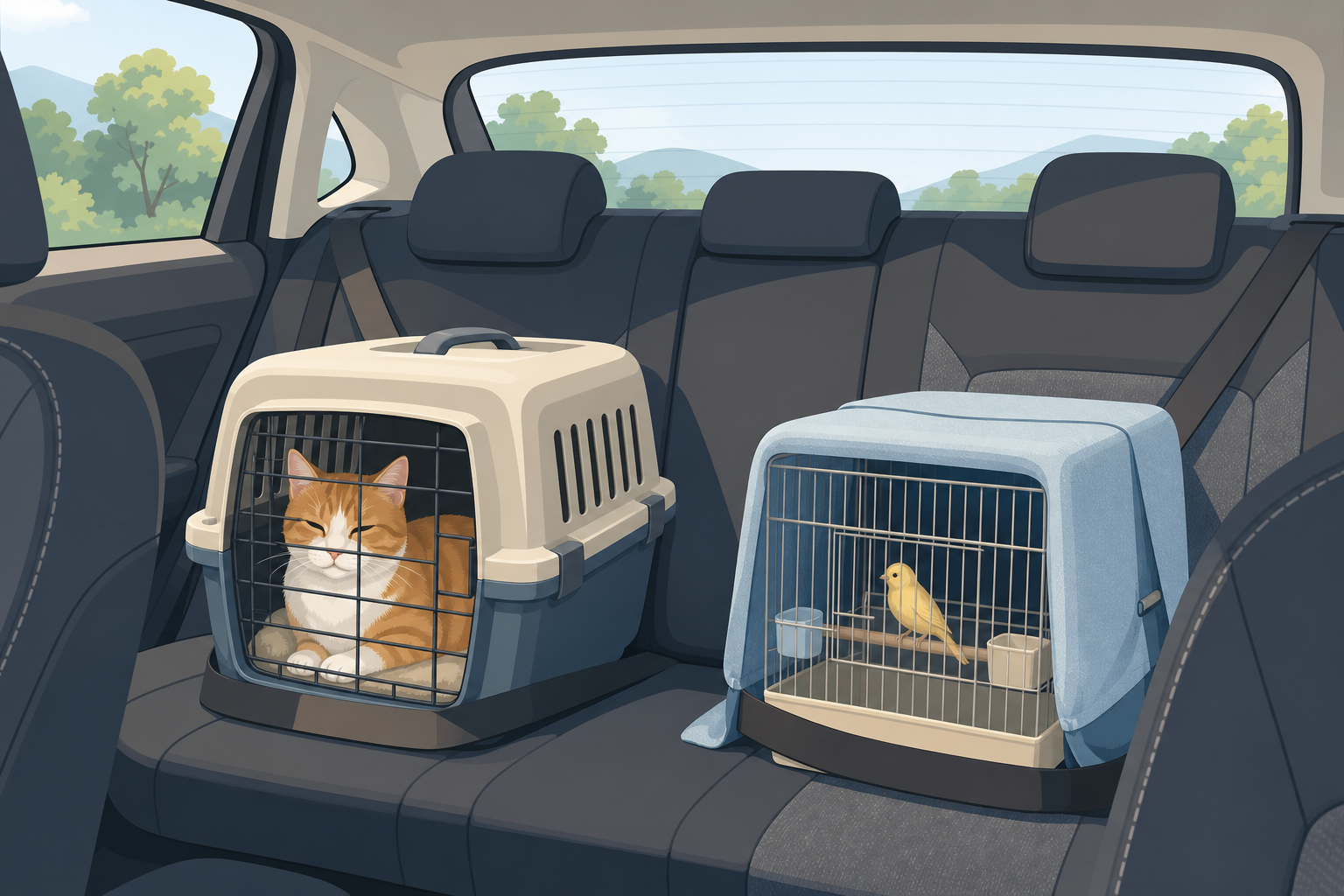
For companion animals, the Italian Ministry of Health recommends suitable space, a safe environment and sufficient ventilation. A blanket or familiar-smelling item can be placed in the carrier, provided it does not reduce the available space or obstruct airflow S4.
For animals transported in containers or shared compartments, overcrowding and mixing incompatible individuals can increase the risk of falls, conflict or stress. Groups should therefore be selected according to the species and its social behaviour. When in doubt, seek help from competent personnel.
Ventilation and temperature: avoid extremes
Effective ventilation does not simply mean opening a window. It must provide regular air exchange without exposing the animal to strong draughts, direct sunlight or sudden changes in temperature. The risk of heat stress increases when the internal temperature rises, particularly if the animal cannot move away from the heat source. EFSA assessments indicate that, for many farmed animals, more space, lower temperatures and shorter journeys are important measures for reducing risks S1.
Before departure, check:
- the expected temperature along the entire route, not just at the starting point;
- whether shade and air exchange will be available during stops;
- whether fans, sensors or monitoring systems are working, when provided;
- protection from rain, wind and sunlight, as well as excessively hot or cold surfaces;
- whether rapid action will be possible in the event of a breakdown or unexpected traffic delay.
For transport covered by European legislation, the vehicle must protect animals from adverse weather conditions and temperature extremes while maintaining air quality appropriate to the species. Regulation (EC) No 1/2005 also sets specific requirements for ventilation, accessibility, non-slip flooring and space S3. These requirements do not replace a practical assessment of the animal’s condition or the needs of its species.
Space, stability and driving
Space should be sufficient to allow the animal to adopt a natural position and respond to vehicle movements. An overcrowded compartment restricts movement and ventilation, while an unsecured space can increase the risk of slipping or impact.
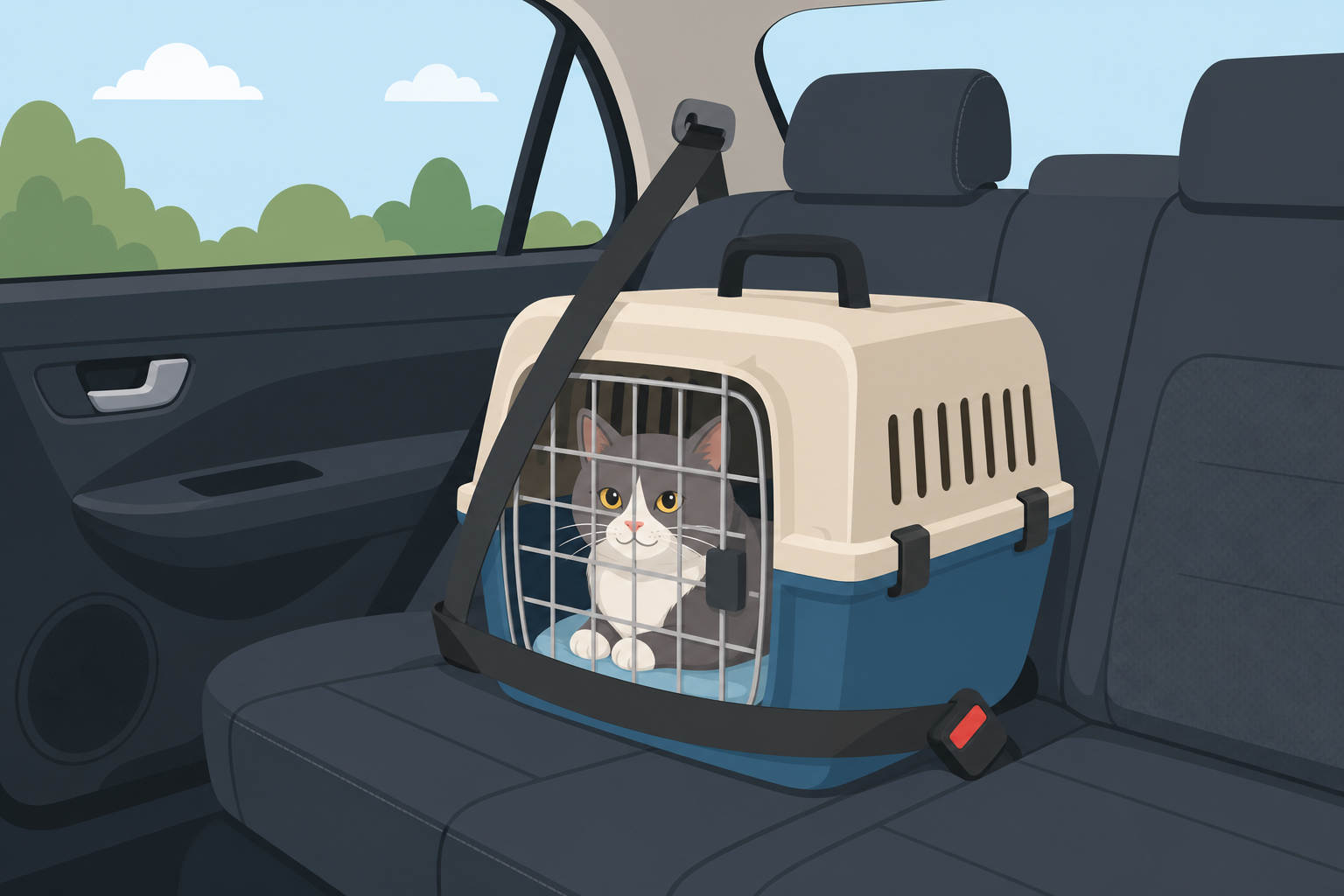
The carrier must be secured so that it cannot tip over or slide. Driving should be smooth, with gentle acceleration, braking and changes of direction. The floor also matters: a non-slip surface helps reduce loss of balance and falls S3.
For horses and farm animals, the size of the space, partitions and restraint systems must be selected according to the species, weight and journey duration. EFSA emphasises that available space should allow animals to adjust their posture in response to acceleration and other events during transport S1.
Noise and loading management
Loading is often one of the most sensitive stages. Sudden noises, shouting, chasing and abrupt movements can increase agitation and make impacts or falls more likely. WOAH guidelines recommend planning loading and unloading and carrying them out calmly, without unnecessary noise, harassment or unnecessary force S2.
Owners and operators can help by:
- preparing all equipment before approaching the animal;
- keeping the route to the vehicle clear and safe;
- using slow, consistent movements;
- avoiding surrounding the animal with unnecessary people;
- stopping the procedure if agitation clearly increases;
- not improvising restraint or lifting methods that are unsuitable for the species.
The aim is not to force the animal into the vehicle, but to make the procedure predictable and controlled. For professional transport, drivers and handlers must understand behaviour, handling, inspection and emergency procedures S2.
Rest stops and journey duration
The journey should be as short as possible while still meeting the needs of the trip. A useful stop is not simply a matter of parking. It should allow the animal, temperature, ventilation, carrier stability and any dirt or leakage to be checked.
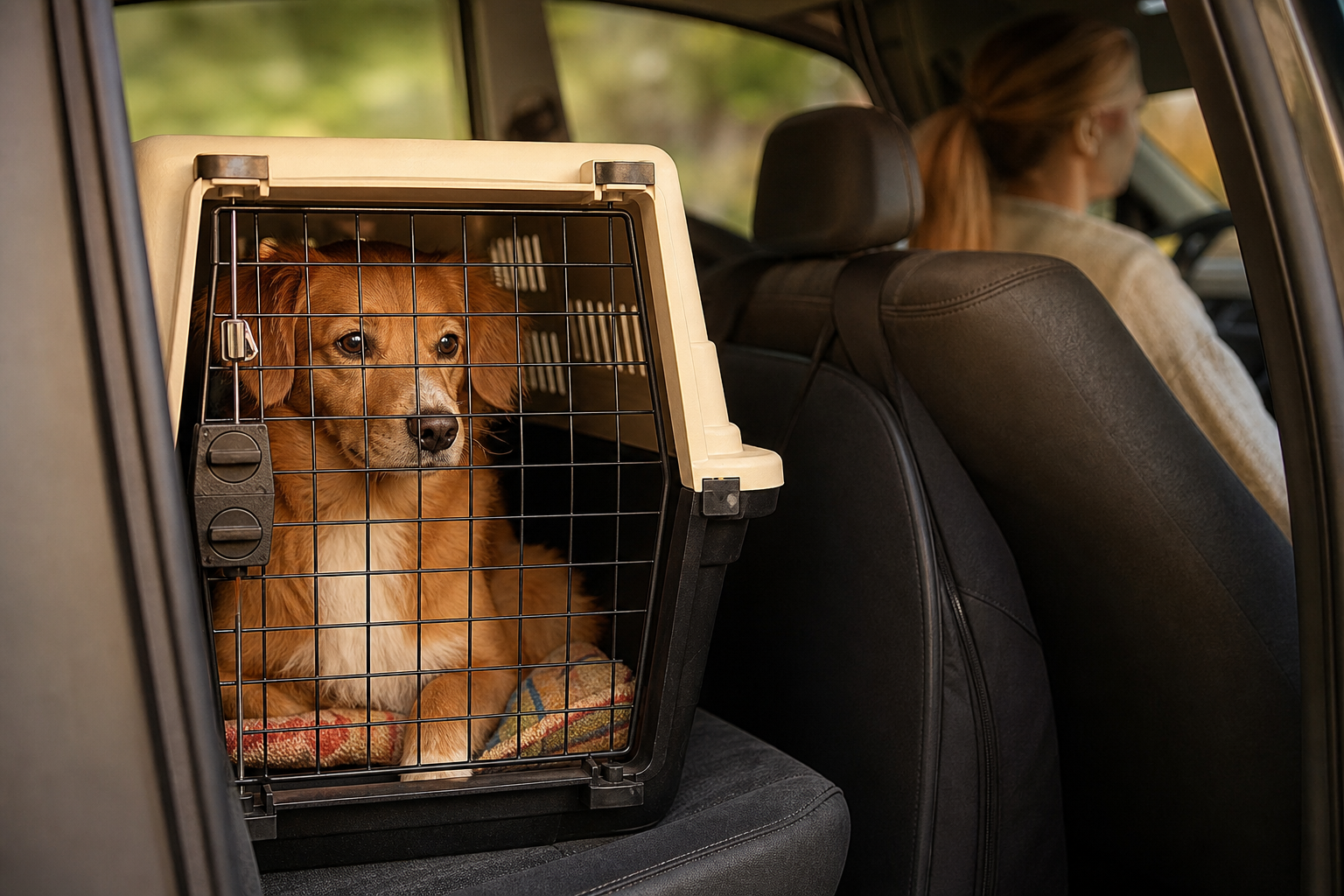
When travelling by car with companion animals, the Italian Ministry of Health recommends planning regular stops, carrying fresh water and preventing exposure to extreme temperatures S4. The frequency of stops should still take account of the species, age, journey length and individual condition: there is no single interval that is suitable for every animal.
For professional transport, feeding, watering, rest and journey duration are subject to specific requirements, which may vary according to the species and type of transport. The transporter must prepare a journey plan and an emergency plan for unexpected events. In Italy, the Ministry requires an emergency plan for some authorisations relating to long journeys S5.
Observing behaviour during the journey
Checks should be based on observing the animal, not only on whether the vehicle is functioning properly. Before departure, during stops and on arrival, check posture, balance, apparent breathing, responsiveness, interaction with the surroundings and the ability to access water or food when appropriate.
Signs such as persistent agitation, unusual stillness, repeated escape attempts, difficulty maintaining balance, sudden aggression or marked apathy deserve attention. These signs alone do not establish a cause or provide a diagnosis. They do indicate that it is necessary to stop safely, reassess the transport conditions and, if there is doubt about the animal’s fitness to travel or its condition, contact a veterinarian. WOAH identifies behaviour, general signs of illness and indicators of stress, pain and fatigue among the aspects personnel should be able to recognise S2.
Good practice for owners
- Gradually familiarise the animal with the carrier or vehicle when time allows.
- Bring water, its usual food and items needed for its normal routine.
- Check documents and the requirements of the destination country or facility in advance.
- Secure the carrier or use appropriate safety systems.
- Avoid unnecessary noise, handling and changes.
- Plan stops in safe, well-ventilated locations.
- Do not give sedatives or other products without first consulting a veterinarian.
- Ask a veterinarian for advice before travelling if the animal has previously struggled with journeys, if its fitness to travel is uncertain or if the route involves unusual conditions.
The Italian Ministry of Health also recommends consulting a veterinarian in advance when an animal tends to become stressed during travel, so that appropriate strategies can be considered beforehand S4.
Good practice for transporters and operators
Anyone organising or carrying out transport should check the animal’s fitness to travel, select a vehicle suitable for the species, plan the route and stops, monitor ventilation and temperature, and keep procedures available for breakdowns, delays and emergencies. Personnel should be trained in loading, unloading, observation and handling without violence or unnecessary fear [S2]S3.
It is equally important to define responsibilities clearly among the owner, organiser, driver, any accompanying person and the receiving facility. Incomplete communication can lead to delays, a lack of water or food, document-handling errors and difficulties responding to an unexpected event.
A simple pre-departure check
Before setting off, ask:
- Is the vehicle clean, intact, stable and suitable for the species?
- Can the animal maintain a natural posture?
- Does air circulate without excessive draughts?
- Will the temperature be compatible with the planned journey?
- Can loading take place without rushing or unnecessary force?
- Are realistic stops and checks planned?
- Are water, documents and emergency contacts available?
- Is there an alternative plan in case of traffic, heat, breakdown or delay?
- Is there any doubt about the animal’s fitness to travel?
If the answer to the last question is yes, it is prudent to postpone the journey where possible and seek advice from a veterinarian. Well-organised transport cannot eliminate every possible source of stress, but it can reduce risks and allow faster action when conditions change.
Note: Rules may vary according to the species, number of animals, journey duration, purpose and means of transport. For commercial transport, international journeys or special circumstances, check the applicable requirements and contact the relevant authorities or a qualified professional.
Sources
- [S1] More space, lower temperatures, shorter journeys: EFSA recommendations to improve animal welfare during transport — EFSA
- [S2] Chapter 7.3. Transport of animals by land — WOAH
- [S3] Regulation (EC) No 1/2005 on the protection of animals during transport — EUR-Lex
- [S4] Consigli utili per viaggiare con i nostri animali — Ministero della Salute
- [S5] Trasporto degli animali vivi — Ministero della Salute